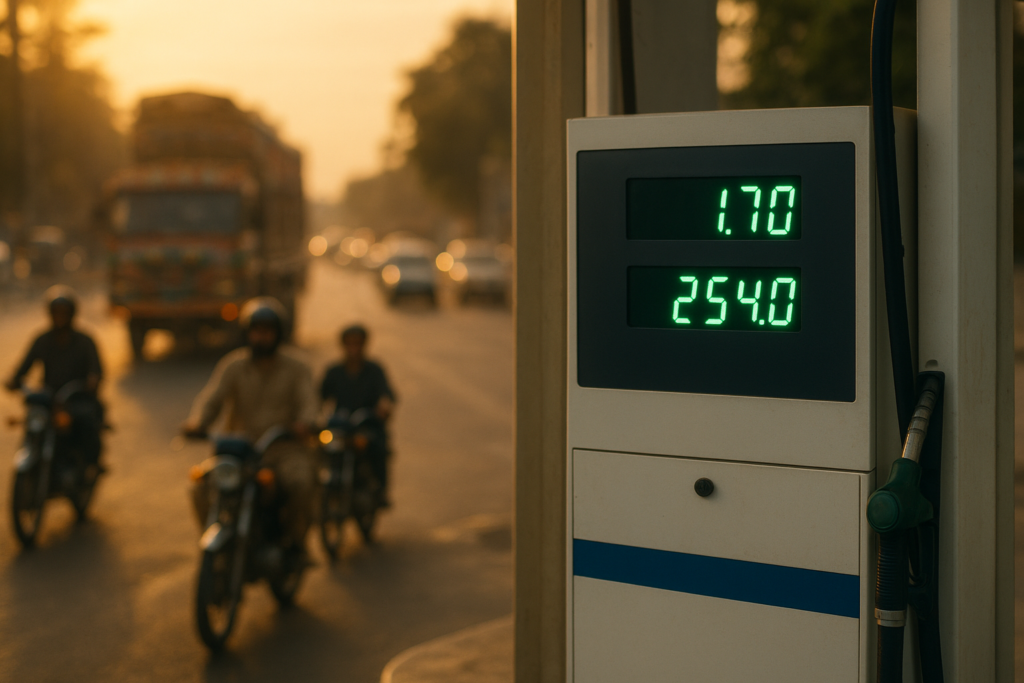

Petrol and diesel prices have been lowered by the federal government, with a uniform reduction of five rupees per litre announced this week. The decision, part of a broader effort to ease the cost of living for Pakistani households, is expected to provide immediate relief to commuters, transport operators and businesses that rely heavily on fuel.
The new rates will be effective from the first day of the upcoming month. Petrol will now be sold at a price that is five rupees lower than the previous level, while diesel will see the same reduction. The adjustment reflects the latest market trends and the government’s commitment to stabilising fuel costs amid rising inflation.
Economic analysts note that a five‑rupee cut, though modest, can have a noticeable impact on daily expenses for millions of citizens. Lower fuel prices reduce operating costs for public and private transport, which can translate into lower fares and freight charges. In turn, this may help curb the upward pressure on food and essential goods that depend on transportation costs.
The Ministry of Finance indicated that the price reduction aligns with the national budget’s focus on supporting vulnerable segments of society. By trimming fuel expenses, the government hopes to free up disposable income for families struggling with higher prices for food, utilities and healthcare.
Industry representatives have welcomed the move, stating that a predictable and reduced fuel price environment encourages investment in logistics and trade. Trucking firms anticipate better profit margins, while small business owners expect a slight decrease in overheads.
Consumers are advised to check receipts at fuel stations to ensure the revised rates are applied correctly. The reduction also underscores the importance of monitoring global oil markets, as fluctuations in crude oil prices continue to influence domestic fuel pricing.
Overall, the five‑rupee cut in petrol and diesel rates represents a strategic step by the Pakistani government to alleviate inflationary pressures and support economic stability. As the new prices take effect, stakeholders across the transport, commercial and household sectors will gauge the real‑world benefits of the policy shift.