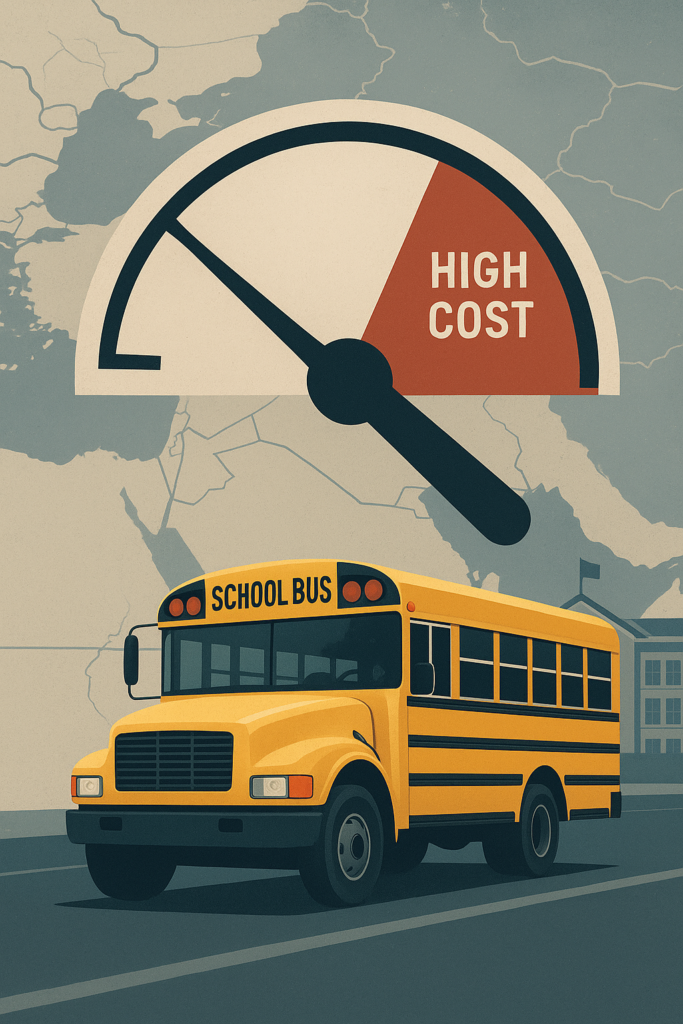

Rising Diesel Prices from the Iran Conflict Put Pressure on U.S. School Budgets
The ongoing conflict involving Iran has triggered a sharp increase in global diesel prices, creating a ripple effect that is now being felt across American public schools. Transportation costs, which represent a significant portion of district operating expenses, have surged as diesel fuel becomes more expensive and harder to source. School administrators are reporting tighter budgets, delayed projects and a growing need to re‑evaluate spending priorities.
Fuel costs are a core component of school district budgets because many districts rely on diesel‑powered buses to transport students. According to recent data, diesel prices have risen by more than 30 percent since the conflict escalated, outpacing inflation and putting additional strain on already limited financial resources. For districts that already operate with narrow margins, the added expense is forcing difficult choices.
Many school boards are now confronting the reality that a larger share of their budget must be allocated to transportation. This shift reduces the amount of money available for classroom instruction, extracurricular activities, technology upgrades and facility maintenance. In some cases, districts have postponed or cancelled planned capital projects, such as new school buildings or renovations, to free up funds for fuel. Others are exploring alternative transportation strategies, including the use of gasoline‑powered vehicles, route optimization software and, in a few forward‑looking districts, electric buses.
The impact extends beyond transportation. Higher diesel costs increase the price of heating oil and other diesel‑based utilities, which can raise operating expenses for school facilities, especially in colder regions. As utilities climb, districts may need to cut back on energy‑intensive programs or defer maintenance, potentially affecting the learning environment.
State education departments are monitoring the situation closely. Several states have begun to provide temporary financial assistance to districts facing acute fuel price spikes. These measures include emergency grants, low‑interest loans and the reallocation of state education funds. However, experts caution that short‑term relief may not be sufficient if diesel prices remain elevated for an extended period.
School leaders are also turning to community partnerships and private sector collaborations to mitigate the financial pressure. Some districts have entered agreements with local businesses to share transportation resources or receive fuel discounts. Others are encouraging car‑pooling and walking programs where feasible, aiming to reduce the number of buses needed each day.
The broader economic context adds another layer of complexity. Inflationary pressures, supply chain disruptions and fluctuating oil markets all contribute to the uncertainty surrounding future diesel costs. Policymakers are urged to consider the cascading effects of international conflicts on domestic education funding and to develop strategies that protect essential school services.
Parents and community members are being asked to stay informed and support district initiatives that aim to balance fiscal responsibility with educational quality. Transparent communication about budget adjustments, potential program cuts and alternative transportation plans can help maintain public trust during this challenging period.
In summary, the rise in diesel prices linked to the Iran conflict is creating a budgetary squeeze for U.S. public schools. Transportation and utility costs are climbing, forcing districts to re‑prioritize spending and seek innovative solutions. Ongoing state assistance, community collaboration and strategic planning will be critical to ensure that students continue to receive a stable and high‑quality education despite the financial headwinds.