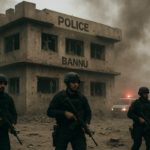

Analysis – No War, Yet No Peace
The security landscape in South Asia remains in a state of uneasy equilibrium. While open hostilities have not resumed, the absence of a lasting peace settlement continues to fuel uncertainty across the region. Recent diplomatic overtures, confidence‑building measures and military posturing suggest a fragile status quo that could tip in either direction.
Key Drivers of the Current Stalemate
Territorial disputes remain at the core of the tension. Both sides maintain a strong presence along the contested border, reinforcing defensive positions and conducting regular patrols. Although large‑scale combat operations have been avoided, sporadic skirmishes and cross‑border incidents persist, undermining confidence in any long‑term de‑escalation.
Political leadership on both sides has expressed a willingness to engage in dialogue, yet domestic pressures limit the scope of concessions. Nationalist sentiment, amplified by media narratives and social platforms, creates a political environment where any perceived compromise is quickly framed as a betrayal of national interests.
Economic considerations also play a pivotal role. Trade corridors and energy projects promise mutual benefit, but progress is hampered by security concerns and bureaucratic hurdles. The potential for economic interdependence to act as a peace catalyst is therefore constrained by lingering mistrust.
Recent Diplomatic Initiatives
In the past month, a series of low‑level talks were held in neutral venues, focusing on humanitarian issues, prisoner exchanges and the establishment of a joint monitoring mechanism. While these discussions have yielded incremental agreements, they have not addressed the fundamental sovereignty claims that drive the conflict.
International actors have offered mediation support, emphasizing the need for a comprehensive framework that includes confidence‑building, arms control and people‑to‑people exchanges. However, the effectiveness of external mediation is limited by the insistence of the parties to retain full control over the negotiation agenda.
Security Implications
The ongoing stalemate poses several security risks. First, the continued militarisation of the border increases the likelihood of accidental escalation. Second, non‑state actors operating in the fringe zones may exploit the ambiguity to conduct cross‑border raids, further destabilising the region. Third, the lack of a clear peace roadmap hampers long‑term strategic planning for defense establishments, leading to resource diversion from development priorities.
Prospects for a Sustainable Peace
Achieving a durable peace will require a multi‑track approach. Confidence‑building measures such as joint disaster response drills, cultural exchanges and transparent communication channels can reduce the risk of misinterpretation. Simultaneously, a structured dialogue on core issues—border demarcation, water sharing and trade facilitation—must be pursued with clear timelines and verification mechanisms.
Economic incentives can serve as a catalyst for cooperation. Expanding cross‑border trade, investing in joint infrastructure projects and creating special economic zones could generate interdependence that outweighs the costs of conflict. Engaging civil society, academia and business leaders in the peace process can also broaden the stakeholder base and create a constituency for lasting reconciliation.
Conclusion
The region stands at a crossroads where the absence of war does not equate to peace. While diplomatic channels remain open, substantive progress is hindered by entrenched political narratives, security concerns and economic bottlenecks. A concerted effort that blends confidence‑building, economic collaboration and a clear diplomatic roadmap is essential to transform the current stalemate into a foundation for lasting peace.