
Iran and United Arab Emirates spar at BRICS foreign ministers’ gathering, raising concerns over intra‑group cohesion
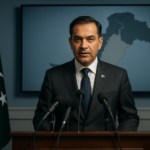
The latest meeting of BRICS foreign ministers, held in Johannesburg, turned into a diplomatic showdown when representatives of Iran and the United Arab Emirates exchanged sharp remarks over regional issues. Both sides accused each other of undermining stability in the Gulf, prompting a heated exchange that was noted by observers as one of the most contentious moments in the summit’s history.
Iran’s foreign minister opened the discussion by reaffirming Tehran’s support for the Palestinian cause and condemning what he described as “unilateral actions” by certain Gulf states that threaten regional peace. He also warned that external powers exploiting sectarian divides could destabilise the broader Middle East. The remarks were widely interpreted as a direct reference to the UAE’s recent diplomatic initiatives with Israel and its growing security cooperation with Western partners.
In response, the UAE’s foreign minister defended Abu Dhabi’s foreign policy, emphasizing the importance of dialogue, economic integration and the normalization of relations with Israel as steps toward lasting peace. He rejected Iran’s accusations, stating that the United Arab Emirates remains committed to a “balanced approach” that respects the rights of all parties, including the Palestinian people, while also pursuing constructive engagement with regional neighbours.
The exchange quickly escalated when Iran’s delegation accused the UAE of “political opportunism” and of using its economic clout within BRICS to marginalise Tehran’s perspective. The UAE side countered by accusing Iran of “fueling sectarian rhetoric” that hampers the collective effort to address global challenges such as climate change, food security and economic recovery.
BRICS chairperson, Brazil’s foreign minister, intervened to calm the situation, reminding both delegations that the forum’s purpose is to foster cooperation rather than amplify bilateral disputes. He urged the parties to keep their disagreements within bilateral channels and to focus on the summit’s agenda, which includes discussions on trade facilitation, digital economy cooperation and reforms of the New Development Bank.
Analysts note that the clash reflects deeper geopolitical frictions that extend beyond the BRICS platform. Iran’s strained relations with Gulf monarchies, particularly over the nuclear issue and maritime security, have intensified since the 2023 Gulf Cooperation Council summit. Meanwhile, the UAE’s expanding diplomatic outreach, highlighted by its recent Abraham Accords‑related agreements, signals a shift toward broader regional integration that Tehran views with suspicion.
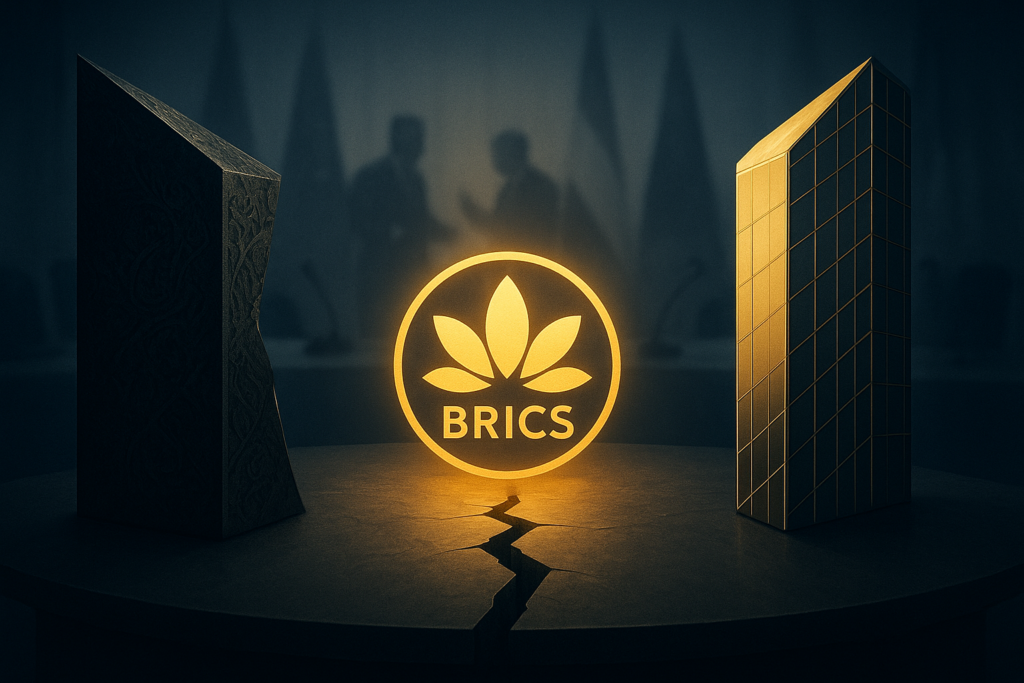
The incident may have implications for the cohesion of the BRICS bloc, which has been seeking to present a united front against perceived Western dominance. Observers suggest that while the dispute is unlikely to derail the summit’s core objectives, it underscores the challenge of reconciling divergent foreign policy priorities among member states.
Both Iran and the UAE have indicated that they will continue bilateral talks to resolve their differences, emphasizing that their engagement within BRICS does not preclude direct dialogue. The next BRICS summit, scheduled for 2027, will likely test whether the two countries can move past this confrontation and contribute constructively to the group’s long‑term agenda.