
Pakistan’s defence establishment reaffirmed its growing self‑reliance in a recent briefing by the Director General of the Inter‑Services Public Relations (DG ISPR). Emphasising that the armed forces are “prepared” for any challenge, the statement highlighted a series of indigenous projects that are reshaping the country’s military capabilities.
Key Indigenous Developments
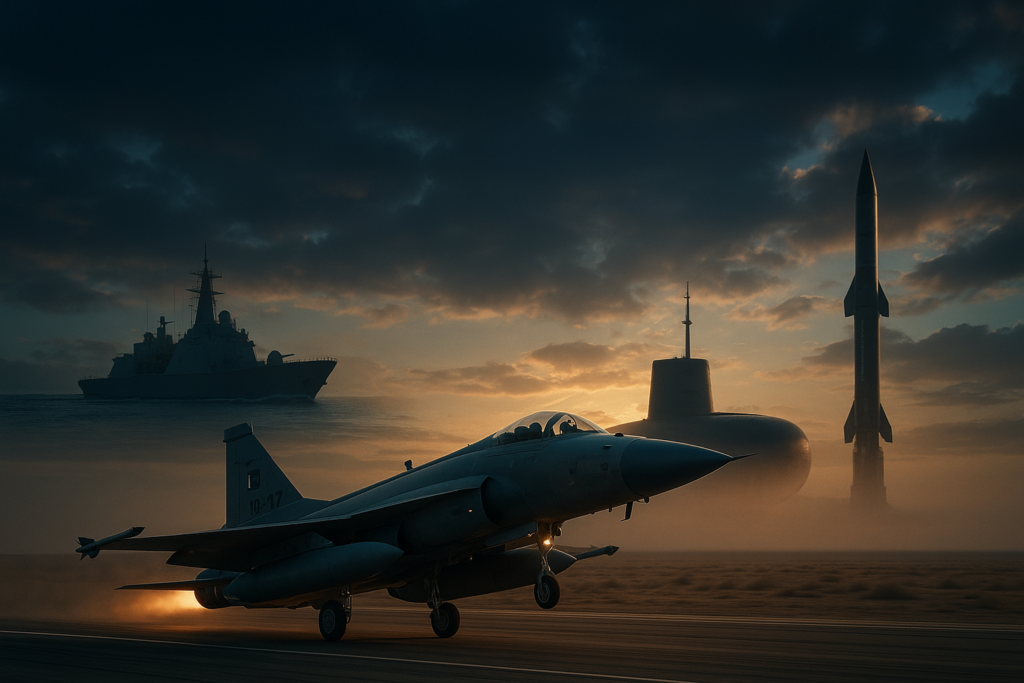
The briefing listed several home‑grown platforms that demonstrate Pakistan’s advancing defence industry. Among the most notable are the Shaheen‑III strategic missile, the Hatf‑VIII (Ra’ad) cruise missile, and the newly tested Babur‑III ballistic missile. These systems reflect a mature missile programme capable of delivering precision strikes across a wide range.
In the air domain, the Pakistan Aeronautical Complex (PAC) has successfully completed flight trials of the JF‑17 Block III fighter, incorporating modern avionics, an active electronically scanned array radar and enhanced weapons integration. The indigenous trainer aircraft, the MFI‑17, continues to support pilot training while the newly introduced unmanned aerial vehicle, the Burraq‑II, offers advanced surveillance and strike capabilities.
Naval modernization also features prominently. The indigenous frigate program, led by the Karachi Shipyard, has delivered the latest multi‑role warship equipped with modern combat management systems and indigenous anti‑ship missiles. Additionally, the development of the “Hangor” class submarines underscores a strategic focus on underwater deterrence.
Industrial Partnerships and Export Potential
The DG ISPR underscored the role of public‑private partnerships in accelerating technology transfer and production capacity. Collaboration between the Ministry of Defence Production and local firms has resulted in the domestic manufacture of ammunition, armored vehicles and electronic warfare suites. These achievements not only reduce dependence on foreign suppliers but also position Pakistan as a potential exporter of cost‑effective defence solutions to friendly nations.
Strategic Outlook
According to the briefing, the armed forces are prepared to safeguard national sovereignty through a blend of indigenous innovation and strategic alliances. The emphasis on self‑sufficiency aligns with the broader national policy of “defence self‑reliance,” aiming to ensure that critical systems remain operational under any geopolitical pressure.
The DG ISPR concluded that ongoing research and development, coupled with robust testing regimes, will continue to enhance the operational readiness of the Pakistan Army, Navy and Air Force. As indigenous projects move from prototype to full‑scale production, the country’s defence posture is expected to become increasingly resilient and adaptable.
For readers seeking up‑to‑date information on Pakistan’s military advancements, the focus remains on indigenous missile technology, locally built combat aircraft, modern naval vessels and the expanding domestic defence industry. These developments collectively reinforce the message that Pakistan’s armed forces are well‑prepared and increasingly self‑reliant.